
Inspired by the Danish/Moroccan business woman, corporate counselor and author Soulaima Gourani’s way of going on vacation, I decided in 2016 to spend my vacation “differently”. Soulaima likes to spend up to three months of vacation per year to attend Summer School at universities around the world, such as Yale, Berkeley, Stanford, Harvard, Shanghai and the list goes on. She does this to keep herself sharp and to boost her creativity, network and cultural understanding.
This time around I had two weeks to spend. I divided the vacation into two parts: one focusing heavily on cultural understanding and people diversity, and one focusing on network, creativity and knowledge gathering.
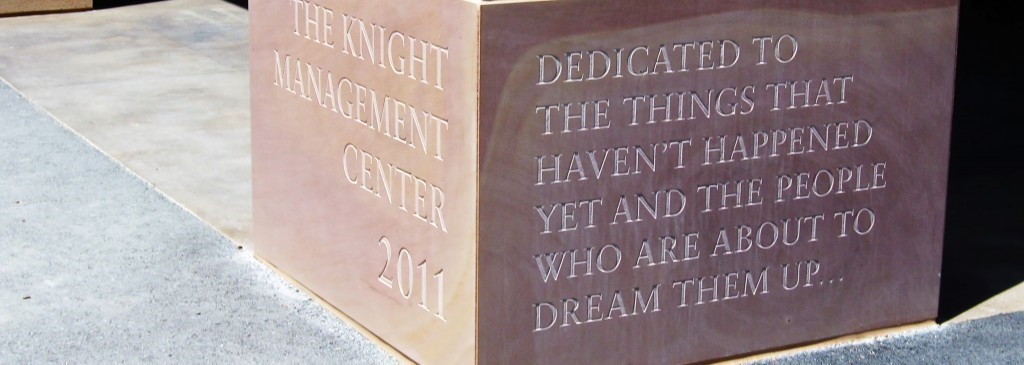
First part also included a visit to Harvard, just like the second part included a visit to Stanford. I have always been fascinated by the top ranking schools and wondered just what it is that make them so ‘top ranking’. I found a spirit and passion on campus with the students that any organization would be envious of. Both schools foster a unique culture based on different sets of values and purpose that creates an incredible atmosphere, but most importantly it pushes talent forward and the environment demands room for vulnerabilities and weaknesses, and that you turn these into strengths. Not only are the schools empowering a you that is capable of going that extra mile – they will make you capable of running a marathon over and over again without shedding one drop of sweat (Blood and tears, yes. Sweat, no.). And that bond this will create to your fellow runners – that is where the magic happens. Yes, my fascination has not declined one bit since these visits, as you can tell. Am I being too overly excited here? Just have a look at Stanford’s cornerstone inscription:
Following the purpose of cultural understanding and people diversity, I had the pleasure of spending 9 days in a minivan with 12 strangers. We were on a mission to explore pieces of the north-eastern corner of America and the south-eastern part of Canada. People came from all over the world to join this trip; America, Australia, Denmark, New Zealand, South Korea, Switzerland and last but not least the United Kingdom. Ages ranging from 18 to 35 with stories of next to none similarity. Talk about a melting pot! What struck me the most at the end of this first part of my vacation, was that there had been zero friction, discussions or unhappy people on board. I dedicate this success to a strong facilitation of our Tour Leader, whom at all times emphasized the Good Advice:
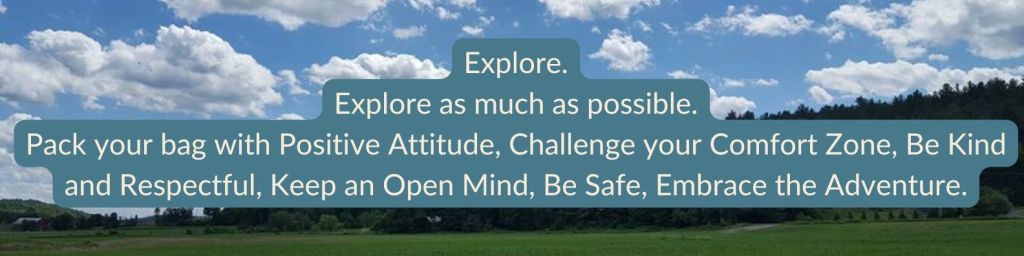
Can it really be this simple for teamwork to make the dream work? Purpose: Explore. Goal: Explore as much as possible. Values: Positive Attitude, Challenge your Comfort Zone, Be Kind and Respectful, Keep an Open Mind, Be Safe, Embrace the Adventure. Success rate: 100 %. (If you are curious about the award winning company facilitating this, it is called TrekAmerica, and they got it figured out.)
Snap back to reality, second part took off as planned with networking, knowledge gathering and creativity input. About a month ago I shared a request on LinkedIn to get connected with people in and around the Bay Area in California during the period of June 23rd to July 1st. It worked like a charm! Thank you networkers – let me know when I can return the grand favor.
I had the pleasure of getting a little extra insight into the Silicon Valley mentality through presenters from companies such as WriteWellApp (a writing software to streamline your writing process), Quixey (the search engine for apps) and PwC (well, you all know PwC). What I learned here was help is always around for those who ask for it, networking in Silicon Valley has its own eco-system and the surprising reality behind the statement that “In Silicon Valley, everyone has time for a meeting.” I also found out why everyone has time for a meeting. They are really efficient! And straight to the point. I would advise anyone to prepare for a knowledge gathering meeting as suggested by Harvard Business Review: Help Others First, Know What You Want To Ask and Ask Smartly.
For more out-of-the-ordinary input, I visited The Commonwealth Club in San Francisco with the motto ‘putting you face-to-face with today’s thought leaders’. The Commonwealth Club in San Francisco hosted a well-visited event on Turning Homelessness into Headline News – a topic that seems far out of reach for someone born and raised in the welfare state of Denmark. But none the less an event that inspired me – and had me walking up and down the streets afterwards discussing the topic with myself and anyone who had something to say about it. It was a perfect babbling moment with the homeless people in the streets of San Francisco.
This cause has united more than 70 competitive news organizations in and around San Francisco, and adding on +90 other news organizations from as far away as Seattle, D.C, Dallas and closer by Los Angeles. All on the mission to uncover possible answers to the tough questions: What does success look like? What good are we not doing? Why are we doing the same things, when it is not working? Is this rational? And ending on the note “Listen more, talk less. Start with empathy.”
Another more intimate event presented me to Professor of Management and author David Burkus, speaking on the topics of creativity, entrepreneurship and organizational behavior. David discussed how we have moved from a physical factory to an idea factory, how we should be studying the work that needs to be done and manage based on that, and why you should write your organizational chart in pencil: Organizational charts come from the railroad industry. A business model that doesn’t change that much, with a need for a steady organization. He recommends shifting focus to project based work instead of work based. All is relative to industry, environment, etc. but I tend to agree with him highly. Through my studies I came across Ramboll that is successfully working with a ‘pencil drawn’ organization chart. (Ramboll is a leading engineering, design and consultancy company founded in Denmark 1945. Today a global player with more than 18,000 employees.)
David touched upon a lot of different topics, all of which – if interested – you can find in his book ‘Under New Management – How Leading Organizations Are Upending Business as Usual’. The last chapter in his book is titled “Celebrate Departures” and focuses on how you should make employees that are departing a part of your own alumni. Yes, a company alumni! Send the employees off with a cake and a ‘see you’ instead of escorting them out of the building with a box in their hands. The returning alumni will provide the organization with new information relatable to your organization, and it could increase the ability to act in a timely manner. Why not utilize a 2-way knowledge flow and possibly get one step ahead? Please enlighten me on the downsides of this, as I am having a tough time finding them. Deloitte also has their own alumni, as many other knowledge dependent organizations (aren’t we all knowledge dependent?).
Returning home from a vacation full of adventures my luggage is filled with inspiration, new knowledge, energy boosting experiences and best of all – new friends and network.
Thank you for reading my blog. This blog was originally posted on July 10th 2016 on LinkedIn. You are always welcome to reach out to me to make a comment, share it with your friends, give me a call if you have questions or if you can help enlighten me further me on this topic. Always keen to learn more, always happy to meet new people.



 Momentum Marketing